Pages

Tuesday, 12 September 2017

Bactria and disinfectants savlon

                            Bactria  and disinfectants 


purpose : how concentration can affect the performance rate of disinfectants in killing micro-organism


hypothesis: I predict that the higher the concentration of the disinfectant ,the higher the rate of killing off the bacteria.


equipment:

Agar plate 
marker pen 
filter paper 
hole puncher 
10ml measuring cylinder
Dettol
ruler 
bacteria 
cotton bud 
plastic pipette 
tweezers
Ethanol 

method:
1. With a permanent marker ,label your agar plate as a quadrant (see diagram) Image result for quadrant
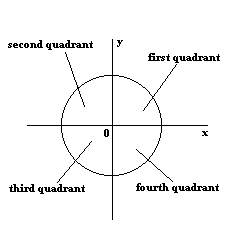
2. Take a cotton bud ,dip it into the yoghurt and the yoghurt is in a breaker.
Spread evenly across the agar plate. 

3. Use a plastic spotting tile and a pipette  and Take the Savlon and diluted the Savlon 
- for %0 Savlon  put water in the first hole in the spotting tile and use the pipette to drop the water  ,10 drops. This is called  "control"
-for 1:10 savlon  , take  one drop of savlon that you used in the first spotting tile hole  and put that one drop in a second hole ,put 9 drops of water in the second tile.
-for 1:100 savlon  , take one drop of the 1:10 solution then put the one drop into the third tile and then put 9 more drops of water in the third tile.
-for 1:1000 savlon , take one drop of 1:100 solution next put the one drop into the fourth tile and then put 9 drops of water in the fourth tile.

4. Get the filter paper to hole punch 4 circles .

5. Turn on the Bunsen burner. Get the tweezers and put the top of the tweezers in Ethanol then run it over the flame to sterilizes the tweezers.

6. Pick up the circles with the tweezers and put the first circle in the  %100/control  savlon  ,put it in the first quadrant then sterilizes the tweezers again and put the second circle in the 1:10  , put it in the second quadrant then do the same step with the 1:100 and the 1:1000.

7. Put the lid on the agar plate and leave it for 24 hours.


research:    

*bacteria 

*choroxylenol 

*what does choroxylenol do to bacteria 

*bacteria life cycle 

* dettol -how does it work -what is it -what is disinfectant. 


Chloroxylenol, also known as para-chloro-meta-xylenol , is an antiseptic and disinfectant which is used for skin disinfection and cleaning surgical tools . It is also used within a number of household disinfectants eg floor , window , bath etc and wounds cleaner. Chloroxylenol is most effective against Gram-positive bacteria. https://en.wikipedia.org/wiki/Chloroxylenol.


Bactria a member of a large group of unicellular microorganisms which have cell walls but lack organelles and an organized nucleus, including some which can cause disease.

gram-negative bacteria have a very thin peptidoglycan layer that is sandwiched between an inner cell membrane and a bacterial outer membrane.http://fermup.com/blog/what-does-gram-positive-mean/

Bacteria life cycle 


Friday, 7 July 2017

Evil make up

https://nz.pinterest.com/emmabakers177/make-up/


 ( link ) This is what I picked for my make up . I like the pattern in some of the pictures I saved  and the eyes, lips. I think it will fit what I am imagining to do.

Thorn make-up by Psycho Path. I'm not that much into the lips, but the eyes look gorgeous! It would be perfect to match some evil character...


These two are my favorite , I have different Ideas.  I'm thinking  dirty skin with gorgeous make up.
I'm thinking  about making it have a little colour, To represent weakness: All evil have a weakness. I'm thinking ( in the link) having blue , purple , green, not just black  for this make up. I'm also thinking that sick looking too or a young looking witch fairy.

Wednesday, 17 May 2017

rates of reaction

Experiment 1      investigating the effects of temperature on reaction rate.


Aim : 
i want to investigate how temperature effects the reaction rate.


equipment
-conical flask
-beaker
-measuring cylinder
-stopwatch
-water bath
-paper with a black cross X
-0.1mol/L sodium thiosulfate
-2.0mol/L hydrochloric acid

method
1. put the X paper on bench mat, put the conical flask on top of the paper
2. measure 50ml of sodium thiosulfate solution ,put it into the beaker
3. record the temp of the sodium thiosulfate
4. measure 50ml of HCL , pour this into the conical flask
5. pour sodium  thioslfate into the conical flask , start the stopwatch and swirl the flask . Time how long it takes for the cross to disappear when viewed from above.
6. wash out the flask thoroughly.
7. repeat the experiment ,using a watch bath to heat the sodium thiosulfate to 30degrees then 40 degrees and then 50 degrees.keep the volume of acid the same each time.


result:
room temp , 31s
30 degrees
40 degrees
50 degrees

Experiment 2:        Investigating the Effects of Concentration on Reaction Rates.

Aim:  I want to investigate how temperature effects the reaction rate.

Equipment:

  • conical flask
  • measuring cylinder
  • stopwatch
  • black cross on paper
  • 0.2 mol/L sodium thiosulfate
  • 1.0 mol/L hydrochloric acid (HCL)
Method: 
  1.  Put 'X' on paper on the bench mat, and put the conical flask on top of paper.
  2. measure 10 ml of sodium thiosulfate solution and put it into the conical flask.
  3. measure 40 mls of water and put into the conical flask. Then swirl the flask to mix the contents.
  4. measure 5 ml of HCL and pour this into the conical flask, start the stopwatch and swirl the flask and time how long it takes for the cross to disappear. 
  5. wash out the flask thoroughly repeat the experiment using the other volumes of sodium thiosulfate and water in the table on the right. keep the volume of acid the same each time. 

10mL Thiosulfate/40mL Water took 18 mins & 35 seconds for the X to disappear.
20mL Thiosulfate/30mL Water took 54 seconds for the X to disappear.
30mL Thiosulfate/20mL Water took 1 min 26 seconds for the X to disappear.
40mL Thiosulfate/10mL Water took 24 seconds for the X to disappear.
50mL Thiosulfate/0mL Water took 51 seconds for the X to disappear.


Experiment3: observing the effects of surface ares on reaction rate 


Aim:
To make simple observations during a reaction between calcium carbonate (CaCO3) chips and power , with hydrochloric acid (HCL).


Equipment: 
-boiling tube,
-calcium carbonate chips  and powder 
 -hydrochoric acid 
 -measuring cylinder spatula 

method

1. measure 2ml of hydrochloric acid and pour this into your boiling tube.
2.holding your boiling tube over a sink or heatproof mat, add a pea-size amount of calcium  carbonate powder to your boiling tube. record your observations below.
3. Repeat the experiment, but this time use a chip of calcium carbonate that is roughly the same size as the spatula of powder you used previously. Record your observations below.

observation of powder CaCO3= 
It bubbled up and the hydrochloric acid went cloudy.

observation of CaCO3 chip =
It fizzing up and the hydrochloric acid went cloudy


experiment 4 catalysts 

AIM:
observer the effects of a copper catalyst on the reaction between zine and sulfate acid.


equipment 
- There test tubes
-test tube rack
-10ml  measuring cylinder
-dropping pipette
-granulated zinc
-copper turning or powder
-dilute sulfuric acid (H2SO4)


 Method:

1.  Add roughly the same mass of zinc test tubes 1 and 3.
2.  Add roughly the same mass of copper to test tubes 2 and 3. 
3.  Add 5 mL of dilute sulfuric acid to test tube 1. Note the rate of production of gas bubbles.
4.  Add 5 mL of the acid to test tube 2. Note the rate of production of gas bubbles.
5.  Add 5 mL of the acid to test tube 3. Note the rate of production of gas bubbles.

Observations 

Test tube 1
Zinc and Acid 
it fizzed 


Test tube 2
Copper and Acid 
it bubbled 

Test tube 3 
Zinc, Copper and Acid 
little bubble but after that nothing 


Thursday, 6 April 2017

Eye of African


  I used yellow, green,brown,orange/red colours. The balloon is the constant object in the arts folios.  To me its looks smooth but like when these water colour mix together.  Its my first piece of art work and it keeps reminding about earth, earthy looking because of the green and the yellow. The balloon represents her imagination, then you look at all my other artworks you can see her imagination had gone on a adventure. The balloon represents freedom ,living life, living how you want  , who you would like yo be , it represent who you are. If you are going to write about you life don't make it boring one. To me that's what it represents.

Friday, 24 March 2017

history art

Image result for The Last Supper

The last supper by Leonardo da vinic
4.6m x 8.8m
Santa maria Delle Grazie  
1495-1498

The last supper is late 15-century mural painting by Leonardo da vinic. This is the worlds famous painting.
The painting represents the scene of the last supper of Jesus with his disciples , as it was told in Gospel of John ,13:21.It cover an end wall of the dining hall at the mastery of Santa maria delle grazie in Milan ,Italy. 
Leonardo imagined, and has succeeded in expressing, the desire that has entered the minds of the apostles to know who is betraying their Master. So in the face of each one may be seen love, fear, indignation, or grief at not being able to understand the meaning of Christ; and this excites no less astonishment than the obstinate hatred and treachery to be seen in Judas

.The subject of the Last Supper is Christ’s final meal with his apostles before Judas identifies Christ to the authorities who arrest him.Christ says to his apostles “One of you will betray me,” and the apostles react, each according to his own personality.  Referring to the Gospels, Leonardo depicts Philip asking “Lord, is it I?”  Christ replies, “He that dippeth his hand with me in the dish, the same shall betray me” .  We see Christ and Judas simultaneously reaching toward a plate that lies between them, even as Judas defensively backs away.

The Last Supper is in terrible condition. Soon after the painting was completed on February 9, 1498 it began to deteriorate. By the second half of the sixteenth century Giovan Paulo Lomazzo stated that, “…the painting is all ruined.” Over the past five hundred years the painting’s condition has been seriously compromised by its location, the materials and techniques used, humidity, dust, and poor restoration efforts. Modern problems have included a bomb that hit the monastery destroying a large section of the refectory on August 16, 1943, severe air pollution in postwar Milan, and finally, the effects of crowding tourists.

Tuesday, 21 March 2017

beef wrap and sushi

Chicken wraps


Ingredients:

  • 1 wrap per person
  • Lettuce
  • Cheese
  • Tomato
  • Grated carrot
  • ¼ onions
  • 1t oil
  • Sauces – tomato, bbq, mayo, hummus, chilli
  • 70grams of chicken or 1 breast per table
we change the chicken to beef

Method:

  1. Sauté the chicken and onions together in a pan with oil, high-med heat
  2. Chop and grate the vegetables you require
  3. Place Wraps in microwave for 20 seconds
  4. Place filling onto wrap, roll, pierce with a tooth pick to keep in place (optional)


sushi


Ingredients 

  • 2 cups uncooked short-grain white rice
  • 2 cups water
  • 1/2 cup water
  • 1/8 teaspoon salt
  • 2 sheets nori (dry seaweed), cut into 1/2-inch strips OPTIONAL
  • 2 tablespoons sesame seeds OPTIONAL
Filling
  • Avocado
  • Peppers
  • Chicken with teriyaki
  • mayo

Directions

  1. Wash the rice in a mesh strainer until the water runs clear.
  2. Combine washed rice and 2 cups water in a saucepan. Bring to a boil over high heat, stirring occasionally. Reduce heat to low; cover. Simmer rice until the water is absorbed, 15 to 20 minutes.
  3. Let rice rest, for 15 minutes to allow the rice to continue to steam and become tender. Allow cooked rice to cool.
  4. Combine 1 cup water with the salt in a small bowl. Use this water to dampen hands before handling the rice. Divide the cooked rice into 4 equal portions. Use one portion of rice for each onigiri.
  5. Divide one portion of rice in two. Create a dimple in the rice and fill with filing. Cover with the remaining portion of rice and press lightly to enclose filling inside rice ball. Gently press the rice to shape into a triangle.
  6. You can also use glad wrap in a bowl – see teacher for demonstration.
-why did we need to clean our ingredients
because to get the dirt off and to get harmful bacteria off the ingredients.

-what were 2 high risk food we need to be weary about.
the chicken in both recipe and the rice in the sushi, because if the chicken not cooked it can cause salmonella and the salmonella will cause food poisoning diarrhea, fever, and abdominal cramps. They develop 12 to 72 hours after infection, and the illness usually lasts 4 to 7 days. Most people recover without treatment. But diarrhea and dehydration may be so severe that it is necessary to go to the hospital. 
 Uncooked rice can contain spores of Bacillus cereus, a bacterium that can cause food poisoning. The spores can survive when rice is cooked. If rice is left standing at room temperature, the spores can grow into bacteria.

-what 2 strategies did you put in place.
You would know if the chicken ready because  you would cook it over 75 degrees and if you cut the chicken the juice in the chicken would be clear.
and you cook the rice in boiling water  until they are soft.


art research 2

Image result for painting


I like this art because its colorful, it reminds me of Autumn and the sunset. When I look at this I can see and feel the warmth. It looks relaxing. The painting uses small techniques. I think the theme is just a Autumn   evening ,girl swing on the swing.when I keep on looking at the painting, the word "country" comes to mind because when the sky is red,orange,yellow I heard the saying,"the farmer will have a great day ". I like the colorful leaves in the trees , the colors fits with the red and yellow and the colour   in the paint.